
This guide details the types of mainstream dental X-ray machines on the market in 2026 and their corresponding price ranges, providing an in-depth analysis of the key factors influencing equipment pricing. Furthermore, it offers practical and professional purchasing advice to dental clinics based on industry experience, aiming to help buyers select the dental X-ray machine that best matches their performance, functionality, and needs within their budget.
Dental X-ray machines can be mainly divided into three categories: intraoral X-ray machines, panoramic X-ray machines, and cone-beam computed tomography (CBCT) machines. Each type has unique functions and price ranges.
Intraoral X-ray machines are widely used in general dentistry. They capture images of individual teeth or small areas of the oral cavity by placing an X-ray sensor directly inside the patient's mouth. These dental X-ray machines are compact, easy to operate, and affordable, making them essential equipment in most dental clinics.

Portable intraoral X-ray machines are compact in design, typically handheld or mounted on a lightweight stand, and powered by rechargeable batteries. They are ideal for bedside dentistry, nursing home visits, dental outreach programs, or clinics with extremely limited space. Their main advantage is portability, although the output power may be slightly lower than wall-mounted devices.
Despite their portability, diagnostic accuracy is not compromised, and they still produce high-quality intraoral images. The price of a portable intraoral X-ray machine typically ranges from $1,500 to $5,000, depending on factors such as image resolution, battery life, and brand reputation. Entry-level models with basic functions are priced at the lower end of the range, while high-end portable intraoral X-ray machines equipped with advanced features such as digital imaging compatibility and long-lasting rechargeable batteries can reach prices as high as $5,000.
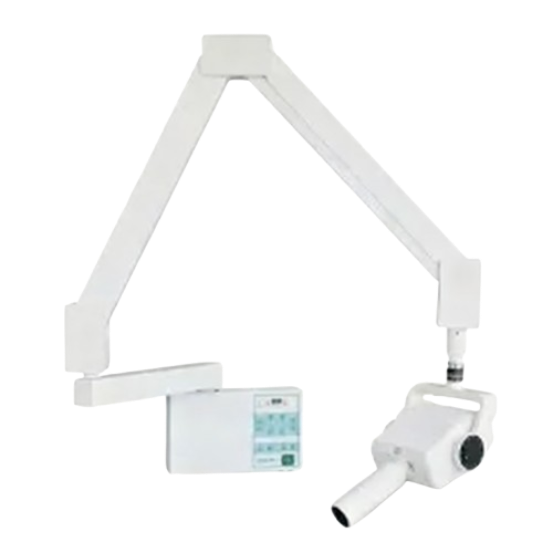
Wall-mounted dental X-ray machines are standard equipment in most dental clinics. Their X-ray tubes are mounted on adjustable arms attached to a wall or cabinet and connected to a fixed control panel. They provide stable power, fast cycle times, and a robust construction suitable for intensive daily use.
Wall-mounted dental X-ray machines are more powerful than most portable intraoral X-ray machines, providing stable performance for daily clinical work. Wall-mounted dental X-ray machines are priced slightly higher than basic portable models, ranging from $3,000 to $8,000. The price difference is determined by factors such as radiation output, imaging speed, and integration with digital dental systems.
A panoramic X-ray machine is an extraoral device that captures a panoramic image of the entire oral cavity in a single scan, covering all teeth, jawbones, sinuses, and the temporomandibular joint. Unlike intraoral models, it does not require placing sensors inside the patient's mouth, making it more comfortable for patients with a pharyngeal reflex. This type of dental X-ray machine is ideal for orthodontic assessments, wisdom tooth examinations, and detection of jawbone abnormalities.
The price of a panoramic X-ray machine is higher than that of an intraoral model, ranging from $10,000 to $30,000. The price depends on image clarity, scanning speed, and additional features such as digital image storage and integration with treatment management software.
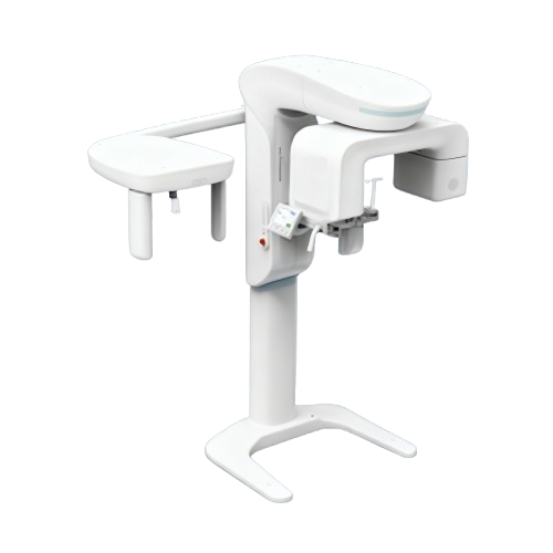
Cone-beam computed tomography (CBCT) is the most advanced dental imaging technology, generating three-dimensional images of the oral and maxillofacial region. Unlike traditional X-ray machines that generate two-dimensional images, CBCT machines provide detailed volumetric images, allowing dentists to observe oral structures from three levels. It is an essential device for complex procedures such as dental implant surgery, root canal treatment, and oral surgery.
As high-end dental X-ray machines, CBCT machines are the most expensive, ranging from $50,000 to $150,000. The price is influenced by factors such as scanning field of view, resolution, scan time, and software features. Entry-level or small-field-of-view CBCT devices start at around $50,000, are more compact and affordable, and are suitable for general dental clinics with specific 3D imaging needs. Mid-to-high-end devices with large fields of view, high resolution, and integrated panoramic/cephalometric measurement capabilities typically cost between $80,000 and $150,000 or even higher, and are mostly used in specialist dental clinics and hospitals.
The difference between 2D and 3D dental X-ray machines is the core factor influencing their price. 2D dental X-ray machines include intraoral models (such as portable intraoral X-ray machines and wall-mounted models) and panoramic models, generating planar 2D images. These devices have relatively simple designs and use traditional X-ray imaging technology, resulting in lower prices.
2D models offer high cost-effectiveness because their hardware and software complexity is lower than 3D models. For example, portable intraoral X-ray machines, as 2D devices, achieve affordable pricing due to their compact design, basic imaging technology, and limited functionality focused on intraoral imaging. The lower production cost and simpler maintenance requirements of 2D dental X-ray machines further reduce the total cost of ownership for clinics.
In contrast, 3D dental X-ray machines (mainly CBCT machines) are significantly more expensive due to their advanced technology. CBCT machines capture multiple 2D images from different angles using a cone-shaped X-ray beam and rotating detectors, then reconstruct a 3D model using sophisticated software. This process requires high-precision hardware components, including advanced X-ray tubes, detectors, and computer systems, as well as complex image processing and analysis software. The development cost of 3D dental imaging technology is high, which is reflected in the final price of CBCT machines.
Furthermore, 3D dental X-ray machines possess enhanced diagnostic capabilities unmatched by 2D models. The ability to visualize anatomical structures in three dimensions reduces the risk of misdiagnosis and improves the accuracy of treatment planning, making it a valuable investment in specialized dental procedures. However, this added value also leads to a higher price. Additionally, the maintenance and calibration costs of 3D models are higher than those of 2D models, requiring regular maintenance to ensure accuracy and performance.
In summary, dental X-ray machines are diverse, offering different functions and price ranges. Portable intraoral X-ray machines and other 2D models are economical choices for general dental needs, while 3D CBCT machines represent a high-cost investment for complex procedures. Clinics should consider their specialty, patient needs, and budget when choosing between 2D and 3D models; technological differences are the core driving factor behind price variations.
The price of dental X-ray machines is determined by a combination of factors, including technology, brand, and market conditions. Each factor directly impacts the final price and reflects the quality, functionality, and practicality of the equipment.
The type of equipment and its core technology are the primary factors determining the price of dental X-ray machines. Basic two-dimensional models such as intraoral X-ray machines and portable dental X-ray machines, due to their simple design and use of traditional imaging technology, are relatively affordable, ranging from $1,500 to $8,000. Three-dimensional equipment, such as cone-beam computed tomography (CBCT) machines, with their cone-beam technology and volumetric imaging capabilities, can meet complex diagnostic needs, and their prices are significantly higher, ranging from $50,000 to $150,000.
Image quality and resolution directly affect the pricing of dental X-ray machines. Models with a resolution higher than 20 line pairs/mm, capable of generating clear and detailed images to ensure diagnostic accuracy, are 15% to 30% more expensive than standard resolution models. Core performance parameters are equally crucial, such as radiation output stability, scanning speed, and digital integration capabilities. For example, panoramic X-ray machines with scanning times under 10 seconds and seamless compatibility with digital dental systems are priced higher due to their improved clinical efficiency.
Brand reputation significantly impacts price. Internationally renowned dental equipment brands such as Sirona, Planmeca, and KaVo charge 20% to 40% more for their dental X-ray machines than niche brands. This premium stems from strict quality control, reliable after-sales service, and market-proven durability. While emerging brands offer cost-effective options, they may lack in technical support and long-term stability.
Of course, major brands also tend to have a brand premium. With fierce competition in the dental X-ray machine market, the imaging and technical support of niche brands are perfectly adequate for the needs of a typical dental clinic. The actual purchase should be based on the clinic's needs and budget, choosing a brand that offers the best value.
The purchasing channel directly impacts the cost of a dental X-ray machine. Purchasing directly from the manufacturer avoids intermediary markups, while authorized dealers often offer bundled packages (such as equipment + sensor + software), which are more cost-effective than purchasing individual components. Furthermore, customized configurations (such as additional sensors, wireless connectivity, and dedicated imaging modes) can increase the price by 10% to 25%, depending on the selected features.
Core components such as X-ray tubes, detectors, and circuit boards account for 40% to 60% of the cost of a dental X-ray machine. Using imported components or high-precision components (such as ceramic X-ray tubes) increases production costs, which are ultimately passed on to the purchaser. Subsequent costs such as transportation, installation, and initial calibration account for 5% to 10% of the total purchase price; for imported equipment, international shipping costs and tariffs further increase costs.
The initial purchase price of a dental x-ray machine is only a part of its total cost of ownership. Ongoing operating costs accumulate annually and must be included in the clinic's budget planning.
Regular maintenance is crucial for ensuring the proper functioning of a dental x-ray machine. Annual maintenance costs range from $500 to $2000 depending on the type of equipment. CBCT machines require more frequent calibration and parts replacement, resulting in relatively higher maintenance costs. Repair costs for accidental damage to components such as sensors and X-ray tubes range from $1000 to $5000; therefore, most clinics choose to purchase a maintenance contract to mitigate unexpected expenses.
ArKang recommends that purchasers purchase a maintenance and upkeep contract simultaneously with the dental x-ray machine. Although this slightly increases the initial purchase cost, from a long-term perspective, it is definitely a worthwhile investment that effectively ensures the stable operation of the equipment.
Professional training is a prerequisite for ensuring the safe and efficient use of dental x-ray machines. Basic training for 2D dental X-ray machines costs $300 to $800 per person, while advanced training for 3D CBCT machines (including 3D image analysis skills) can cost $1,000 to $2,500 per person. Refresher courses are required every 1 to 2 years to meet safety standards, further increasing costs.
Consumable costs vary depending on the type of equipment. Film-based dental X-ray machines require $500 to $1,000 annually for film, developer, and fixer; while digital models reduce these costs, they require regular replacement of sensor covers ($200 to $500 annually), and portable devices require battery replacements ($100 to $300 annually). In the long term, digital models offer better cost-effectiveness in terms of consumables, but require upfront investment in digital sensors.
Dental clinics must comply with radiation safety regulations and undergo regular equipment testing and certification. Annual radiation leak detection costs $200 to $500, and equipment certification every 2 to 3 years costs $300 to $800. Violations may result in fines, making these costs necessary expenses.
Indirect operating costs include electricity, software upgrades, and potential site modification costs. A dental X-ray machine consumes 500 to 1500 kWh of electricity annually, costing approximately $50 to $150. Digital models require $300 to $1000 annually for software upgrades to acquire new features and maintain system compatibility. Larger equipment such as CBCT machines may require site modifications (e.g., adding lead shielding), with initial modification costs ranging from $1000 to $5000.
First, you need to define your clinic's core needs, including the average daily patient volume and commonly used treatments. For small clinics with a low average daily patient volume (less than 20 patients) and primarily offering basic services such as caries detection and routine checkups, portable dental X-ray machines or wall-mounted intraoral X-ray machines are sufficient. These devices are cost-effective and easy to operate. However, for large clinics, or specialized clinics focusing on orthodontics, implantology, or oral surgery, a 3D CBCT dental X-ray machine is necessary to provide detailed volumetric images to support the development of complex treatment plans.
Cost budget is a crucial factor in selecting a dental X-ray machine. The budget should cover not only the initial purchase price but also long-term operating costs such as maintenance, consumables, and training. Small clinics with limited budgets can prioritize economical 2D models; while clinics with sufficient funds and focusing on high-end treatment services can consider investing in a 3D CBCT machine. Balancing equipment functionality with budget is crucial to maximizing the value of a dental X-ray machine without placing an undue financial burden on the clinic.
Before purchasing, a thorough assessment of the clinic's installation conditions is essential. Clinics with limited space can opt for portable or wall-mounted models to save space; CBCT machines require more installation space and necessitate lead shielding. Furthermore, reliable after-sales service is indispensable; choose a brand that provides timely maintenance, repair support, and calibration services. Inadequate after-sales service will directly impact the clinic's normal operations should a dental X-ray machine malfunction.
Brand selection is critical to ensuring the quality and reliability of a dental X-ray machine. Reputable brands with a strong track record in the dental field typically offer stable performance, rigorous quality control, and comprehensive technical support. While emerging brands may be cheaper, they often lack mature after-sales systems, and the long-term durability of their equipment is questionable. However, with technological advancements and increased market competition, emerging brands have significantly improved product stability, and established brands are no longer the only option for customers. Here are three dental X-ray machine brands worth considering for your reference.
Reason for recommendation:
A leading global brand with a comprehensive product line, ranging from intraoral X-ray machines and panoramic X-ray machines to high-end CBCT scanners. Renowned for its superior image quality, innovative software, and equipment stability, it is suitable for medium to large-sized general clinics and specialized hospitals with high requirements for image quality and equipment integration and a sufficient budget.
Disadvantage:
As a top-tier brand, its prices are relatively high. For example, its wall-mounted intraoral X-ray machines or CBCT systems are typically priced at the high end of the market.
It carries a high brand premium.
Reason for recommendation:
Its products offer high cost-performance, moderate prices, and imported X-ray tubes, resulting in clear images.
Disadvantages:
Lacks brand recognition; uses more soft X-rays.

Reasons for Recommendation:
Excellent value for money; inexpensive; compared to Woodpecker, uses fewer soft X-rays, producing high-quality radiation in shorter exposure times, resulting in the lowest X-ray radiation exposure for patients on the market; their dental X-ray machines are high-powered and utilize solid-state insulation technology, ensuring a longer product lifespan.
Disadvantages:
Lacks brand recognition; image clarity is slightly lower than Woodpecker.
In summary, choosing the right dental X-ray machine requires comprehensive consideration of clinic needs, budget, installation conditions, and brand reliability. A well-chosen dental X-ray machine can improve diagnostic accuracy, optimize treatment processes, and lay a solid foundation for the sustainable development of a clinic.
A dental x-ray machine is a significant equipment investment for a dental clinic. The procurement process requires a comprehensive evaluation of key factors such as price range, brand strength, budget planning, and after-sales service quality to ensure the equipment operates stably in the long term.
Of course, you can also look to companies like ArKang that perfectly combine high cost-effectiveness with superior performance. ArKang solemnly promises: during the warranty period, if any dental X-ray machine you purchase suffers non-human-caused damage, we will directly replace it with a brand new device, ensuring your investment is worry-free.
If you encounter any problems when purchasing a dental x-ray machine, please feel free to contact us directly via WhatsApp or fill out the online consultation form. The ArKang team will provide you with professional answers and support promptly.——To learn more about dental X-ray machines, please read this article.
The lifespan of a dental X-ray machine is generally around 9 years, with 100,000 exposures. ArKang's dental X-ray machines, based on solid-state insulated tank cooling technology, can extend the lifespan by another 100,000 exposures, or one-third more.
Portable X-ray machines are advanced equipment in dental clinics, but radiation protection remains crucial.
Buying new equipment provides access to the latest technology and a full warranty; while choosing used dental imaging equipment can typically save 30%–50% in costs, making it more economical. However, it is essential to ensure that used equipment comes from reputable sources.
Portable dental X-ray machines or entry-level panoramic X-ray machines can meet the needs of most small clinics.
Digital X-rays use sensors instead of film, resulting in lower radiation, faster processing speeds, and easier image storage. Traditional X-rays use film and require chemical development.


