Core Advantages
I. The veterinary laryngoscope features multiple blade sizes, suitable for all animal types.
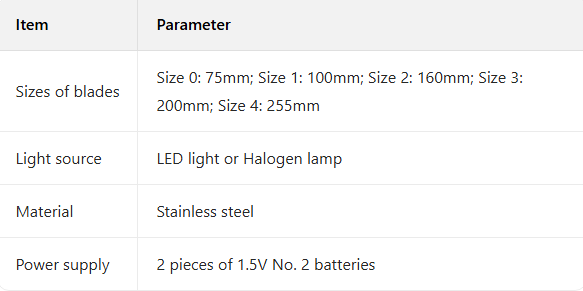
5 blade sizes (0–4): Blade lengths range from 75mm (size 0) to 255mm (size 4). From small animals (e.g., cats, puppies) to large animals (e.g., adult dogs, medium-sized livestock), corresponding blade sizes can be selected to ensure smooth tracheal intubation for animals of different sizes (e.g., size 0 for Chihuahuas, size 3 for Golden Retrievers).
II. The veterinary laryngoscope is ergonomically designed to fit the animal's body position.
Right-side lip design (The lip on the blades is on the right side): The blade lip is designed to align with the animal's tracheal intubation position. During operation, it better aligns with the animal's oral and throat anatomical structure, reducing operational resistance, assisting veterinarians in quickly locating the glottis, and improving intubation success rates (e.g., when intubating dogs in a lateral recumbent position, the right-side lip precisely aligns).
III. The laryngoscope vet offers dual light sources for stable illumination.
LED or halogen lamp: Two light source modes to meet different needs. LED light is energy-efficient and has a long lifespan, suitable for routine diagnostics; halogen lamps provide high brightness and strong penetration, clearly illuminating the larynx in complex intubation scenarios (e.g., when there is excessive oral secretions in the animal), ensuring a clear field of view.
IV. Durable material
Stainless steel: The main body of the veterinary laryngoscope is made of stainless steel, which is corrosion-resistant and resistant to deformation. It maintains stable performance and extends service life (reducing equipment replacement costs) under frequent use (e.g., multiple intubations in pet hospital emergencies) and disinfection (high-temperature or chemical disinfection) scenarios.
V. Convenient Power Supply, Ready to Use
Powered by 2 x 1.5V AA batteries: Standard battery-powered design with easy replacement. Batteries can be quickly replaced in examination rooms or emergency settings without relying on external power sources, ensuring uninterrupted intubation procedures (e.g., during wildlife emergency care in the field).