Core Advantages
I. Veterinary ophthalmology instruments cover ophthalmic diagnosis and treatment
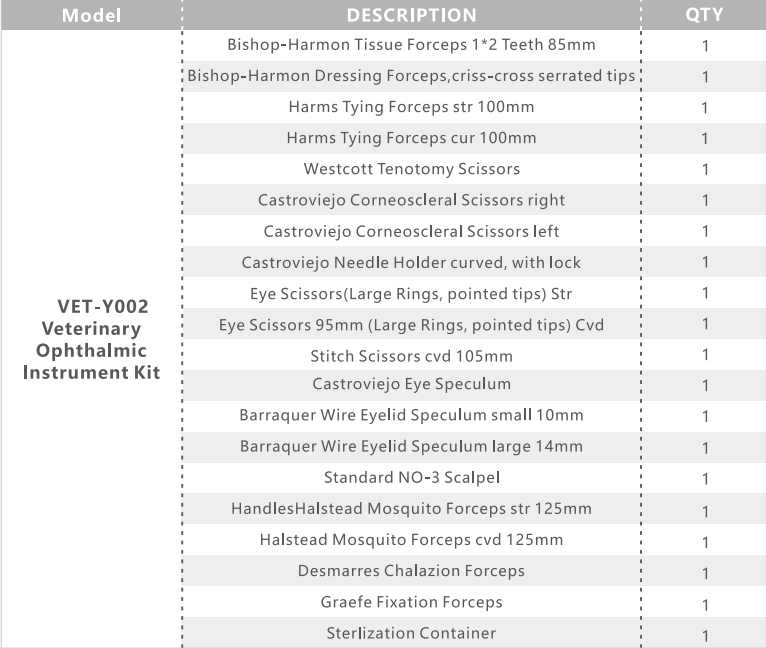
22 types of specialized ophthalmic instruments + sterilisation boxes: including tissue forceps (Bishop-Harmon), ligation forceps (Harms Tying), ophthalmic scissors (Westcott, Castroviejo, etc.), needle holders (Castroviejo), eyelid retractors (Barraquer, Castroviejo), surgical knives (Standard NO-3) , mosquito forceps (Halstead Mosquito), chalazion forceps (Desmarres Chalazion), fixation forceps (Graefe Fixation), and sterilisation trays. From eye examination (eyelid retractor to expose the surgical site), tissue separation (eye scissors, tissue forceps) to suturing and fixation (needle holder), covering the entire process of ophthalmic surgery, suitable for complex procedures such as eyelid tumour removal, corneal suturing, and cataract surgery, without the need for additional instruments, improving surgical efficiency.
II. Veterinary ophthalmology instruments suitable for pet eyes
High-quality stainless steel + precise design:
Ophthalmic scissors: Fine, sharp blades reduce tissue traction damage when cutting delicate eye tissues (such as eye muscles and conjunctiva), protecting the eyeball;
Needle holder: The small, curved tip is designed for the narrow operating space of the eye, providing stable support for suture needles to ensure the quality of precise ophthalmic suturing (such as corneal sutures);
Eyelid retractor: Available in different sizes (10mm/14mm) to accommodate the different eye shapes of dogs and cats, gently opening the eyelids to fully expose the surgical site and reduce interference with the surgical field of view.
III. Scientific storage and convenient sterilisation management
Customised sterilisation boxes: Instruments are categorised by function for storage, with ophthalmic scissors, forceps, and eyelid retractors arranged in separate compartments. This enables quick pre-operative inventory checks and orderly post-operative return to storage. The multi-hole design facilitates high-temperature/chemical sterilisation penetration, reducing the risk of infection in ophthalmic surgeries (e.g., corneal transplant surgery), and is suitable for high-frequency ophthalmic diagnostic and therapeutic scenarios in veterinary hospitals (e.g., ophthalmic specialty clinics).
IV. Enhancing surgical experience and ensuring precise operation
The vet surgery tools are precisely matched: considering the small size and complex structure of pet eyes, the instrument dimensions and forceps head shapes have been optimised (e.g. 85mm tissue forceps are suitable for grasping delicate tissue in pet eyes). Veterinarians can operate comfortably with precise force application, reducing hand fatigue and improving the smoothness of complex ophthalmic surgeries (e.g. glaucoma surgery, retinal repair).