The core technical principle of the tonometer veterinary
Innovative rebound sensing, accurate pressure measurement
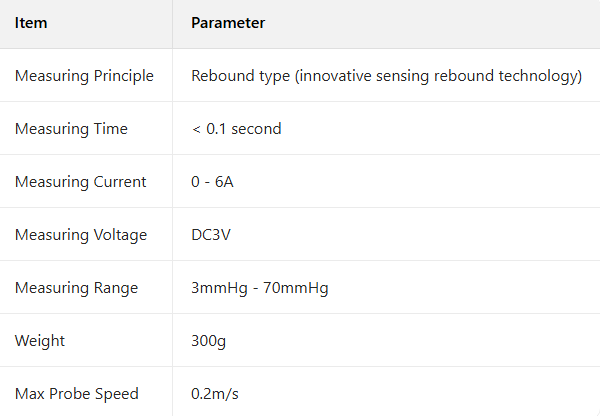
Probe magnetization and movement: The probe is magnetized when inserted into the tonometer, generating N/S poles; the device solenoids generate instantaneous current (about 30 milliseconds), forming a transient magnetic field, pushing the magnetized probe to move toward the cornea at a speed of 0.2m/s (based on the principle of monopole repulsion).
Rebound feedback calculation: The probe contacts the front surface of the cornea, decelerates, and rebounds; when the intraocular pressure increases, the probe deceleration increases and the impact duration is shortened. The electric control switch monitors the solenoid voltage generated by the probe rebound, and the electrical signal processor and microsensor calculate the deceleration of the probe after it hits the cornea, and the measurement data is obtained within 0.1 seconds.
Core advantages
I. Fast and accurate, with results in 0.1 seconds
Ultra-short measurement time: intraocular pressure measurement can be completed in 0.1 seconds, suitable for animal diagnosis and treatment scenarios (such as cats are prone to agitation, and rapid pressure measurement can reduce stress); accurate data can assist veterinarians in timely diagnosis of glaucoma (increased intraocular pressure), intraocular inflammation (abnormal intraocular pressure) and other diseases.
II. The tonometer veterinary is very light and portable, and flexible to operate
300g lightweight design: the whole machine weighs only 300g, and it is not tiring to hold; the handle fits the palm of the hand, and can be operated by one person (such as completing the pressure measurement with one hand after restraining dogs and cats), suitable for outpatient, emergency, and inpatient scenarios.
III.The veterinary tonometer has a wide range of coverage and is suitable for a variety of animals.
3mmHg - 70mmHg measurement range: covers the common intraocular pressure range of small animals (such as dog intraocular pressure 10 - 25mmHg, cat intraocular pressure 15 - 25mmHg), and can also detect abnormally elevated intraocular pressure (such as glaucoma dog intraocular pressure exceeds 30mmHg), meeting the pressure measurement needs of multiple diseases.
IV.The veterinary tonometer is low power consumption, stable and reliable
DC3V power supply + 0 - 6A measurement current: conventional power supply, low energy consumption; the equipment runs stably for a long time (such as multiple pressure measurements in a pet hospital in a single day), reducing fault interference (ensuring smooth diagnosis and treatment process).