Core Advantages
I. Professional light source, suitable for multiple scenarios
High-brightness LED (high-brightness LED light source): The veterinary endoscope offers sufficient brightness, excellent colour reproduction, and a long service life. When examining the gastrointestinal tract of small animals (such as the oesophagus and intestines of dogs and cats) or the airways of horses, it provides clear illumination of the cavity. With 10 levels of brightness adjustment, it meets the lighting requirements for different depths and tissue types (e.g., dimming for detailed observation of superficial mucosa and brightening for exploration of deep cavities).
All-in-one integrated design: Light source + water/air pump integrated, simplifying equipment connections. During veterinary procedures, no additional air pumps or water pumps are required, enabling quick startup and use (e.g., saving preparation time in emergencies).
II. The veterinary endoscope features high-definition imaging for precise diagnosis
21.5-inch medical-grade touchscreen display with 1920x1080 resolution: Full HD medical-grade display with intuitive touchscreen operation. During examinations, it clearly displays subtle mucosal lesions (e.g., ulcers, polyps, bleeding points); the user-friendly touchscreen interface allows for quick image switching and parameter adjustment (e.g., when demonstrating a pet's condition to owners during outpatient visits, it visually highlights the location of lesions).
Medical record management system: Supports wired/wireless networks, enabling storage and management of diagnostic data. Veterinarians can record case histories (including images and diagnoses), facilitating follow-up comparisons (e.g., tracking the progression of intestinal lesions in chronically ill animals) and research statistics (e.g., analysing the incidence of gastrointestinal diseases in a specific dog breed).
III. Flexible operation, veterinary endoscopes can be adapted to a variety of animals
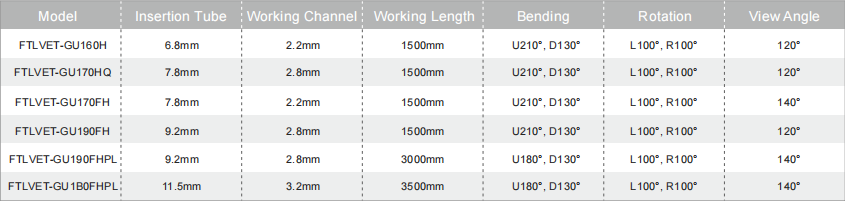
Precise insertion and bending: insertion tube diameter 6.8 mm, working length 1500 mm, bending angle U210°, D130°, rotation L100°, R100°. Suitable for examining narrowed areas of the digestive tract in small animals (dogs and cats), and can also be used to explore the airways of equine animals; flexible bending and rotation provide comprehensive coverage of the examination area (e.g., bypassing intestinal folds to observe lesions).