
In the field of medical diagnostics, the hematology analyzer—also commonly referred to as a blood analysis machine or hematology analyzer machine—is a cornerstone tool. It transforms the way medical professionals evaluate blood composition, turning complex manual processes into fast, accurate, and reliable procedures. Whether in a busy hospital laboratory, a community clinic, or a research facility, this instrument provides critical insights into a patient’s health by analyzing the cellular and biochemical components of blood. This article will break down everything you need to know about hematology analyzers, from their basic definition to how to choose the right one for your needs.
A hematology analyzer is a specialized medical instrument designed to quantify and characterize the cellular components of blood, including red blood cells (RBCs), white blood cells (WBCs), platelets, and related parameters such as hemoglobin concentration and hematocrit. Unlike traditional manual blood counting, which relied on microscopes and human judgment—making it time-consuming and prone to error—the modern blood analysis machine automates these processes, ensuring consistency and precision.
At its core, a hematology analyzer machine works by processing a small sample of anticoagulated blood (typically a few microliters) and using advanced technologies to detect, count, and classify blood cells. It then generates a comprehensive report, often called a complete blood count (CBC), which is one of the most frequently ordered diagnostic tests worldwide. This report helps clinicians identify conditions like anemia, infections, leukemia, and clotting disorders, making the hematology analyzer an indispensable asset in preventive care, disease diagnosis, and treatment monitoring.
While the exact mechanics vary by type, most hematology analyzers follow a standardized workflow that combines sample processing, detection, and data analysis. Here’s a step-by-step breakdown of how blood analysis machine operates:
The user loads a blood sample—usually collected in a tube containing an anticoagulant like EDTA to prevent clotting—into the hematology analyzer machine. Many modern models feature automatic sample loading, which minimizes human contact and reduces the risk of contamination. The instrument then aspirates a precise volume of blood (often less than 10 microliters) to ensure accurate results.
The blood sample is diluted with a specialized buffer solution to ensure the cells are evenly distributed and at a concentration suitable for detection. This step is crucial because undiluted blood has too many cells, which would overlap and lead to counting errors. The hematology analyzer uses mechanical mixing to ensure the diluted sample is homogeneous before moving to the detection stage.
This is the core step, where the blood analysis machine uses one or more detection technologies (discussed in detail later) to identify and count blood cells. For example, in electrical impedance technology, the diluted sample passes through a small aperture surrounded by electrodes. As each cell passes through the aperture, it disrupts the electrical current, creating a voltage pulse. The size of the pulse corresponds to the cell’s volume, while the number of pulses corresponds to the cell count.
The hematology analyzer’s built-in computer system converts the raw detection signals (like voltage pulses or light scattering patterns) into meaningful data. It calculates parameters such as RBC count, WBC count, platelet count, hemoglobin level, and mean corpuscular volume (MCV). For differential WBC counts, the instrument classifies white blood cells into subtypes (e.g., neutrophils, lymphocytes) based on their size or chemical properties. Finally, the results are displayed on the instrument’s screen, printed, or sent to a laboratory information system (LIS) for storage and review.
The hematology analyzer is a versatile tool with applications across various areas of medicine and research. Its primary use is to perform complete blood counts (CBCs), but its utility extends far beyond basic counting. Here are the key applications of hematology analyzer machine:
A CBC from a blood analysis machine provides critical clues for diagnosing a wide range of conditions. For example, a low RBC count or hemoglobin level indicates anemia, while a high WBC count suggests an infection or inflammation. Abnormal platelet counts point to clotting disorders—low platelets increase bleeding risk, while high platelets raise the risk of blood clots. In oncology, abnormal WBC counts or immature cell types (detected by advanced analyzers) can signal leukemia or other blood cancers.
Clinicians use hematology analyzer results to track how patients respond to treatment. For instance, chemotherapy often reduces blood cell counts, so regular CBCs help adjust dosages to avoid dangerous side effects. Patients with chronic conditions like kidney disease (which affects RBC production) or autoimmune disorders also rely on frequent blood analysis machine tests to manage their health.
Annual physical exams often include a CBC, as a hematology analyzer machine can detect early signs of disease before symptoms appear. For example, subtle changes in blood cell counts might indicate undiagnosed thyroid issues, nutritional deficiencies (like iron or vitamin B12 deficiency), or chronic conditions.
Beyond human health, hematology analyzers are used in biomedical research to study blood disorders and test new treatments. Veterinary clinics also use specialized blood analysis machines to evaluate the health of animals, as blood cell parameters are just as important for diagnosing pet or livestock diseases.
Hematology analyzers are not one-size-fits-all. They are classified based on automation level, detection technology, and functionality, each tailored to specific laboratory needs. Understanding these types is key to selecting the right hematology analyzer machine.
Automation level determines how much manual intervention the hematology analyzer requires, directly impacting efficiency and error risk.
The fully automated hematology analyzer is the workhorse of large hospitals and high-volume laboratories. It handles every step from sample loading to result output without manual assistance. These machines can process dozens to hundreds of samples per hour, making them ideal for busy settings. They also minimize human error, as manual pipetting and counting are eliminated. Advanced models even feature automatic sample rerun capabilities—if a result is abnormal, the blood analysis machine will reprocess the sample to confirm accuracy.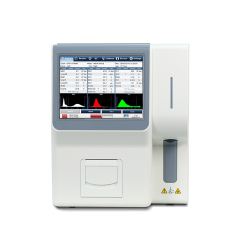
For example, ArKang's AKTE320 is a fully automated three-part differential blood analyzer that requires no manual intervention, simplifying the workflow while maintaining high efficiency and reliability.
Semi automated hematology analyzers balance cost and functionality, making them suitable for small clinics, rural hospitals, and veterinary practices. They automate core steps like cell counting and data processing but require manual sample preparation—such as diluting the blood and loading it into the detection chamber. These machines are slower than fully automatic models (processing 5–15 samples per hour) but are more affordable and easier to maintain, making them a practical choice for low-volume settings.
The detection technology used by a hematology analyzer machine determines its accuracy, speed, and ability to classify cells. Here are the most common technologies:
This is the most widely used technology in basic hematology analyzers. It works on the principle that blood cells are poor conductors of electricity. As diluted blood passes through a small aperture, each cell displaces a volume of electrolyte solution, creating a voltage pulse. The number of pulses equals the cell count, while the pulse amplitude corresponds to cell volume. This method is fast and cost-effective but is limited in its ability to classify WBC subtypes (it can only distinguish between large and small cells).
Advanced blood analysis machines use flow cytometry to achieve precise cell classification. The sample is stained with fluorescent dyes that bind to specific cell components—for example, dyes that attach to DNA in WBC nuclei. The stained cells then pass through a laser beam one by one. The laser excites the fluorescent dyes, causing them to emit light, while scattered light provides information about cell size and shape. The hematology analyzer uses these signals to classify WBCs into five or more subtypes with high accuracy. This technology is essential for oncology and hematology laboratories.
Light scattering is often paired with impedance technology in mid-range hematology analyzers. It measures how light is scattered when it hits a blood cell—forward scatter (in the direction of the laser) indicates cell size, while side scatter (perpendicular to the laser) reflects cell granularity. By combining these two measurements, the blood analysis machine can classify WBCs into three or more subtypes, making it more versatile than impedance alone.
This technology is used specifically to measure hemoglobin concentration in hematology analyzer machines. The diluted blood sample is treated with a reagent that converts hemoglobin into a colored compound. A light source passes through the sample, and the hematology analyzer measures how much light is absorbed. The absorbance is proportional to hemoglobin concentration, providing a quick and accurate reading.
Older or specialized hematology analyzers use centrifugation to separate blood into layers—plasma, buffy coat (WBCs and platelets), and RBCs. The blood analysis machine then measures the thickness of each layer to calculate parameters like hematocrit (the percentage of blood made up of RBCs). This method is slower and less accurate than modern technologies but is still used in some low-resource settings.
This classification is based on how many blood cell subtypes and parameters the hematology analyzer can measure, ranging from basic to comprehensive.
A 3-part differential hematology analyzer machine classifies WBCs into three subtypes: granulocytes (neutrophils, eosinophils, basophils), lymphocytes, and monocytes. It uses impedance or basic light scattering technology and is ideal for routine screenings in clinics and small hospitals. It provides essential parameters like RBC count, WBC count, platelet count, and hemoglobin, but lacks the precision for complex diagnoses.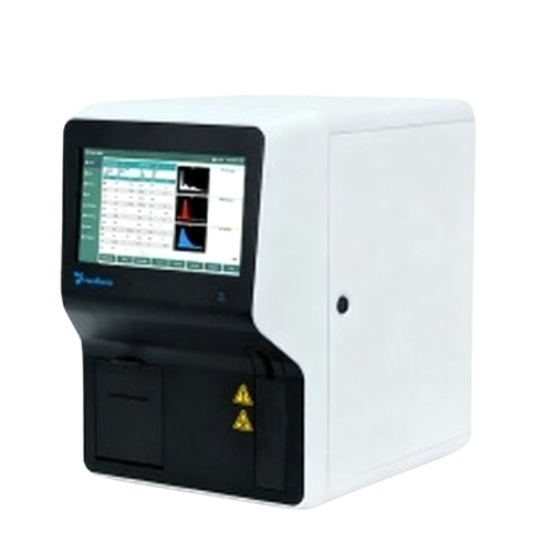
ArKang's AKTE320A is an advanced three-part fully automated blood analyzer that can process 60 samples per hour, providing comprehensive blood analysis.
The 5-part differential blood analysis machine is the standard in most hospital laboratories. It classifies WBCs into five distinct subtypes: neutrophils, lymphocytes, monocytes, eosinophils, and basophils. This level of detail is critical for diagnosing infections (e.g., high neutrophils indicate bacterial infection, high lymphocytes suggest viral infection) and allergic reactions (high eosinophils). These analyzers use light scattering or flow cytometry and generate comprehensive CBC reports.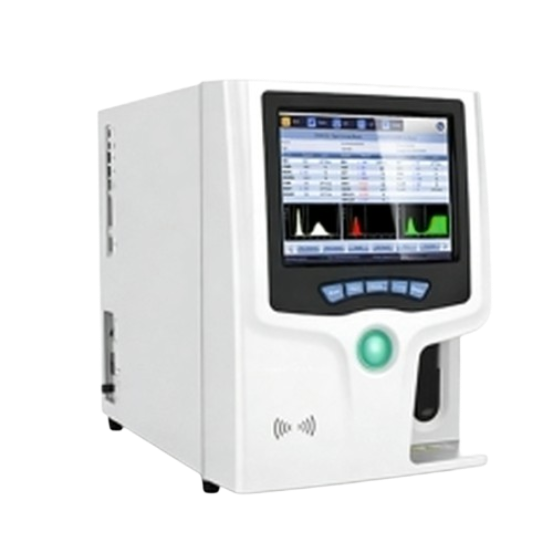
ArKang's AK-URIT-5160 is a 5-part hematology analyzer that uses advanced laser multidimensional cell classification and dual white blood cell counting technology, providing 34 diagnostic parameters, including the reticulocyte index.
High-end hematology analyzers are used in specialized hematology-oncology laboratories and research facilities. They offer 5-part or more WBC differential counts, plus advanced parameters like reticulocyte count (immature RBCs), platelet function analysis, and detection of abnormal cells (e.g., blast cells in leukemia). These machines use flow cytometry with multiple fluorescent dyes and can process samples at extremely high speeds (up to 1,000 samples per hour). They also integrate with LIS systems for seamless data management.
A hematology analyzer measures a range of parameters that provide a complete picture of blood health. These parameters are grouped into three main categories:
Includes RBC count (number of RBCs per microliter of blood), hemoglobin (HGB, oxygen-carrying protein in RBCs), hematocrit (HCT, percentage of blood volume occupied by RBCs), mean corpuscular volume (MCV, average size of RBCs), mean corpuscular hemoglobin (MCH, average amount of hemoglobin per RBC), and mean corpuscular hemoglobin concentration (MCHC, average concentration of hemoglobin in RBCs). These parameters diagnose anemia and identify its cause—for example, low MCV indicates iron-deficiency anemia, while high MCV suggests vitamin B12 deficiency.
Includes total WBC count and differential count (percentages of each WBC subtype). Total WBC count indicates infection or inflammation, while differential counts help pinpoint the cause—e.g., high neutrophils for bacterial infections, high eosinophils for allergies.
Includes platelet count (number of platelets per microliter), mean platelet volume (MPV, average size of platelets), and platelet distribution width (PDW, variation in platelet size). These parameters assess clotting function—low platelet count increases bleeding risk, while abnormal MPV may indicate bone marrow disorders.
Using a hematology analyzer machine requires proper training to ensure accuracy and safety, but the basic workflow is straightforward. Here’s a general guide to operating a typical blood analysis machine:
First, prepare the instrument. Turn on the hematology analyzer and allow it to warm up (usually 10–30 minutes). Perform daily quality control (QC) using standard reference materials—this ensures the machine is calibrated correctly and producing accurate results. If QC fails, troubleshoot the instrument (e.g., check reagents, clean the aperture) before proceeding.
Second, prepare the sample. Collect a blood sample in an anticoagulated tube (EDTA is standard for CBCs). Invert the tube gently 5–10 times to mix the blood and anticoagulant—do not shake, as this can damage cells. For semi automated analyzers, manually dilute the sample according to the instrument’s instructions; fully automatic models handle dilution internally.
Third, load the sample. For manual loading, use a pipette to transfer the sample into the hematology analyzer’s sample cup. For automatic models, place the blood tube into the sample rack and load the rack into the instrument. Enter patient information (e.g., name, ID number) into the analyzer or LIS to link results to the correct patient.
Fourth, run the test. Start the analysis via the instrument’s touchscreen or software. The blood analysis machine will process the sample and display results within 1–5 minutes. Review the results for abnormalities—most analyzers flag abnormal values with symbols (e.g., “H” for high, “L” for low).
Fifth, clean the instrument. After testing, follow the manufacturer’s instructions to clean the hematology analyzer. This may include flushing the system with cleaning solutions to remove blood residue and prevent contamination of future samples. Perform weekly or monthly maintenance (e.g., replacing filters, calibrating the laser) to keep the machine in optimal condition.
Choosing the right hematology analyzer machine requires a comprehensive assessment of your medical institution or laboratory's testing volume, testing needs, operational and financial goals. The following are key factors to consider to guide your decision:
For low-volume testing environments: semi-automatic models or compact fully automated analyzers processing 10-30 samples per hour are available. These hematology analyzer machines are affordable and have low maintenance costs, making them suitable for doctors' offices, small clinics, etc.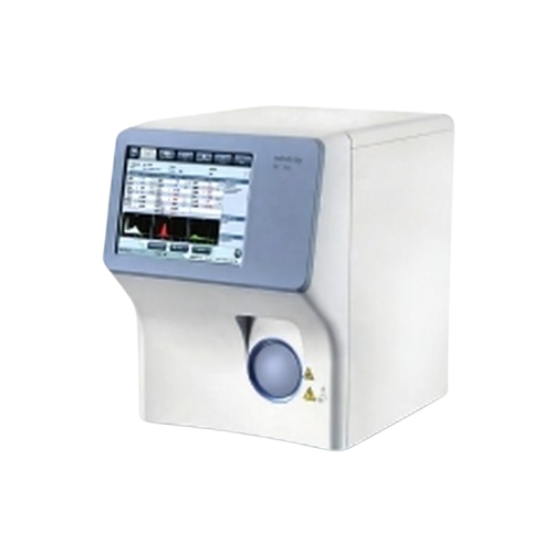
For example, the MINDRAY BC-20S hematology analyzer machine is a compact, fully-featured, three-part differential fully automated blood cell analyzer that can process 40 samples per hour, designed specifically for small to medium-sized laboratories seeking efficient, economical, and reliable performance.
Medium and high throughput laboratories:High-throughput laboratories, including hospitals and core laboratories, typically handle large testing volumes and require a fully equipped automated hematology analyzer capable of processing more than 50 samples per hour. It is recommended to adopt a five-part differential automated hematology analyzer or a higher-throughput fully automated system to effectively meet the testing demands of these settings.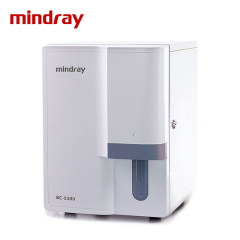
For example, ArKang's MINDRAY BC-5300 model is an advanced fully automated five-part differential hematology analyzer that integrates flow cytometry, semiconductor laser scattering, and chemical staining technologies. It can accurately distinguish between five different white blood cells, process up to 60 samples per hour, and is specifically designed for independent laboratories and clinical environments.
The choice of hematology analyzer should be based on the specific testing needs of the hospital or laboratory.If you only need routine CBCs, a 3-part differential hematology analyzer is sufficient. For hospital or specialty labs, a 5-part differential model is essential. Hematology-oncology labs require high-end analyzers with advanced parameters like reticulocyte counting and abnormal cell detection.
Cost is a crucial consideration when choosing a hematology analyzer. Semi-automatic haematology analyser models are the most affordable, typically priced at several thousand yuan, while high-end fully automated systems can cost hundreds of thousands. Given this wide price range, it is important to select a device that aligns with your actual testing needs and budget—avoid paying for capabilities you will rarely use.
When making your decision, balance the initial purchase price with long-term value. Beyond the hematology analyzer cost itself, factor in ongoing expenses such as reagents, maintenance, and calibration supplies. For example, some analyzers do not require proprietary reagents; although their upfront price may be higher, this can offer greater flexibility and potential cost savings over time.
For buyers with tighter budgets, consider reputable second-tier brands or certified refurbished haematology analyser equipment. This approach can significantly lower initial investment while still ensuring reliable performance. Suppliers such as Foshan ArKang Medical offer well-regarded hematology analyzer options that are popular for their balance of affordability and dependable functionality.
Look for a hematology analyzer machine with a user-friendly interface (touchscreen, intuitive software) to minimize training time. Choose models with accessible parts and clear maintenance instructions—this reduces downtime and repair costs. Reputable manufacturers offer technical support and maintenance services, which are critical for long-term reliability.
When selecting a supplier, prioritize manufacturers with comprehensive after-sales service. Be sure to understand the scope and duration of the supplier's after-sales service, as well as whether there is an after-sales service charge (or if it is already included in the equipment price). Generally, well-known brands will have more comprehensive after-sales service. As an emerging brand in China, ArKang has always served its customers with the principle of "customer first" and has established a professional after-sales service team to help solve customers' questions at any time.
Modern blood analysis machines should integrate with LIS systems to enable automatic result transfer and reduce manual data entry. This improves efficiency and reduces the risk of transcription errors. Some advanced models also offer cloud connectivity for remote monitoring and data sharing.
Based on your geographic region and laboratory accreditation requirements, ensure your hematology analyzer machine complies with CLIA, CAP, FDA (510(k)), CE, or ISO standards.
Before purchasing a haematology analyzer, ensure its physical dimensions are compatible with your reserved workbench or floor space. Before installation, carefully verify the equipment's electrical requirements, operating temperature range, and wastewater treatment process to ensure safe and compliant operation.
The hematology analyzer—or blood analysis machine—is an essential tool in modern medicine, revolutionizing blood testing by combining speed, accuracy, and automation. From basic 3-part differential models for routine screenings to high-end flow cytometry-based analyzers for complex diagnoses, there is a hematology analyzer machine tailored to every laboratory’s needs.
Understanding how these instruments work—from sample processing to detection and data analysis—helps medical professionals make the most of their capabilities. By considering factors like test volume, requirements, budget, and connectivity, you can choose a hematology analyzer that enhances diagnostic efficiency and improves patient care. As technology advances, hematology analyzers will continue to evolve, offering even more precise results and advanced features to meet the growing demands of the medical field.


