Ultrasound has become an indispensable diagnostic tool in obstetrics and gynecology. Nevertheless, high-end conventional ultrasound machine for pregnancy comes with expensive price and low accessibility, making it hard to deploy for pregnancy screening in resource-limited regions. Besides, the application of full-size traditional equipment is restricted by limited clinical space, inconvenient operation, heavy power dependency and shortage of skilled ultrasound physicians and technical support.
In recent years, multiple studies have proven the early clinical advantages of handheld ultrasound device in cardiology and internal medicine. In internal medicine departments, adding only a few minutes of scan with portable ultrasound machine for pregnancy during physical checkups changes the initial admission diagnosis of 20% patients for cardiac and abdominal diseases. Equally reliable data accuracy can be achieved when applying handheld ultrasound device in obstetric and gynecological examinations. Incorporating portable ultrasound machine for pregnancy into routine prenatal checkups will expand obstetric ultrasound coverage in underdeveloped regions thanks to improved portability, affordability and accessibility.
This paper mainly analyzes the measurement accuracy of handheld ultrasound device versus conventional pregnancy ultrasound machine in obstetric biometry and gynecological examination, and recommends qualified best ultrasound machine for pregnancy among available handheld options.
1 Feasibility of Applying Handheld Ultrasound Device as Pregnancy Ultrasound Equipment
Obstetric ultrasound is critical for identifying gestation-related complications, accurate gestational age estimation and fetal condition assessment. Since Ian Donald introduced ultrasound examination in 1958, it has turned into an essential diagnostic modality for obstetrics and gynecology.
Currently, ultrasound equipment falls into two categories: laptop-based portable units and large high-end dedicated cart-type ultrasound machine for pregnancy equipped with color/power Doppler, 3D imaging and advanced software functions. High procurement cost restricts regular prenatal ultrasound access for disadvantaged areas, together with limitations from site constraints, inconvenient operation, fixed power supply and insufficient professional sonographers.
Deploying handheld ultrasound device for gestation scan improves patient access and cuts overall medical expense. Leading ultrasound manufacturers have rolled out cost-effective battery-powered handheld ultrasound machine for pregnancy which connect to smartphones or tablets for image generation. With one quick clinical scan, such devices deliver key evidence for clinical decisions. For emergency pregnant patients with abdominal pain or vaginal bleeding, these machines rapidly confirm implantation site, fetal viability, rule out pelvic masses, and identify fetal presentation and amniotic fluid volume. Widespread use of qualified portable ultrasound machine for pregnancy bears remarkable clinical value.
2 Differences Between Handheld Ultrasound Device and Conventional Pregnancy Ultrasound Machine in Obstetric Examination
Are scan results acquired via handheld ultrasound machine for pregnancy clinically credible? A research was carried out at a university-affiliated teaching hospital in central London’s early pregnancy and gynecology ultrasound department to compare performance of pocket-sized handheld ultrasound device against high-end best ultrasound machine for pregnancy and its impact on patient management.
Research subjects were split into three groups. Group One included pregnant women with first-trimester vaginal bleeding and/or abdominal discomfort; recorded parameters contained gestational sac presence, mean sac diameter (MSD), crown-rump length (CRL), pregnancy location, embryo existence, embryo count and fetal heart beat as well as final diagnosis. Group Two covered women over 14 weeks of gestation receiving routine obstetric scan; collected indexes included fetal femur length (FL), amniotic fluid index (AFI), fetal lie and placental location. Group Three consisted of patients with gynecological disorders; documented data involved uterine version, presence of uterine fibroids, endometrial thickness (ET), adnexal visibility and lesions, laterality and dimension of ovarian masses, and fluid accumulation in pouch of Douglas (POD). Every patient first received scan with handheld ultrasound device by the first operator who then left the room; a second examiner completed follow-up scan with premium conventional equipment without access to prior findings.
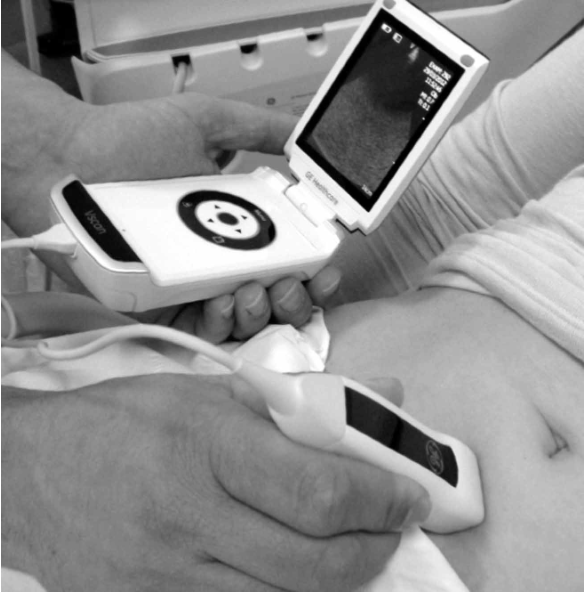
All participants were scanned transabdominally with Vscan pocket handheld ultrasound machine for pregnancy, regardless of bladder filling status. The high-end reference pregnancy ultrasound machine adopted Voluson® E8 Expert and Medison Accuvix® XG equipped with 4–5MHz abdominal probe and 5–9MHz endovaginal probe respectively; all early pregnancy and gynecological cases received transvaginal ultrasound while second/third-trimester obstetric checks used transabdominal scanning.
Statistical outcomes showed excellent consistency (ICC > 0.90; P < 0.001) between handheld ultrasound device and high-end ultrasound machine for pregnancy on continuous measurements including MSD, CRL, FL and mean ovarian mass diameter; only moderate agreement was found for endometrial thickness measurement (ICC = 0.712).
For categorical indicators in early pregnancy cohort, good to perfect consistency existed in pregnancy site confirmation, gestational sac visualization, embryo and cardiac activity detection, fetal number identification and final diagnosis. In mid/late pregnancy group, outstanding matching was achieved on fetal lie and high/low/anterior/posterior placental localization; inadequate cases of polyhydramnios prohibited statistical analysis on AFI consistency. Within gynecology group, very good consistency was noted for uterine version classification, final diagnosis and ovarian mass risk stratification, plus favorable agreement on uterine fibroid detection. Agreement was poor to moderate for left/right adnexa identification; no valid POD fluid comparison could be made as all handheld scans reported negative pelvic effusion whereas three patients had minimal fluid detected by premium cart-type pregnancy ultrasound machine.
Overall scan findings obtained from handheld ultrasound machine for pregnancy highly match results of high-end conventional devices, especially on critical clinical parameters that alter treatment protocols. Even though image definition of handheld ultrasound device is inferior to premium cart ultrasound machine for pregnancy and full-spectrum detailed data cannot be collected, portable equipment provides sufficient key information to guide vital clinical decisions.
As proven by above research, handheld ultrasound device is applicable for triage of first-trimester patients with bleeding or abdominal pain, in-labor placental position and fetal presentation evaluation as well as pelvic mass screening for gynecological patients. Compact size and low cost make portable ultrasound machine for pregnancy highly valuable for clinical decision support in hospitals, primary clinics, community healthcare centers and medical facilities across underdeveloped countries.
3 Recommended Best Ultrasound Machine for Pregnancy
3.1 Clarius C3
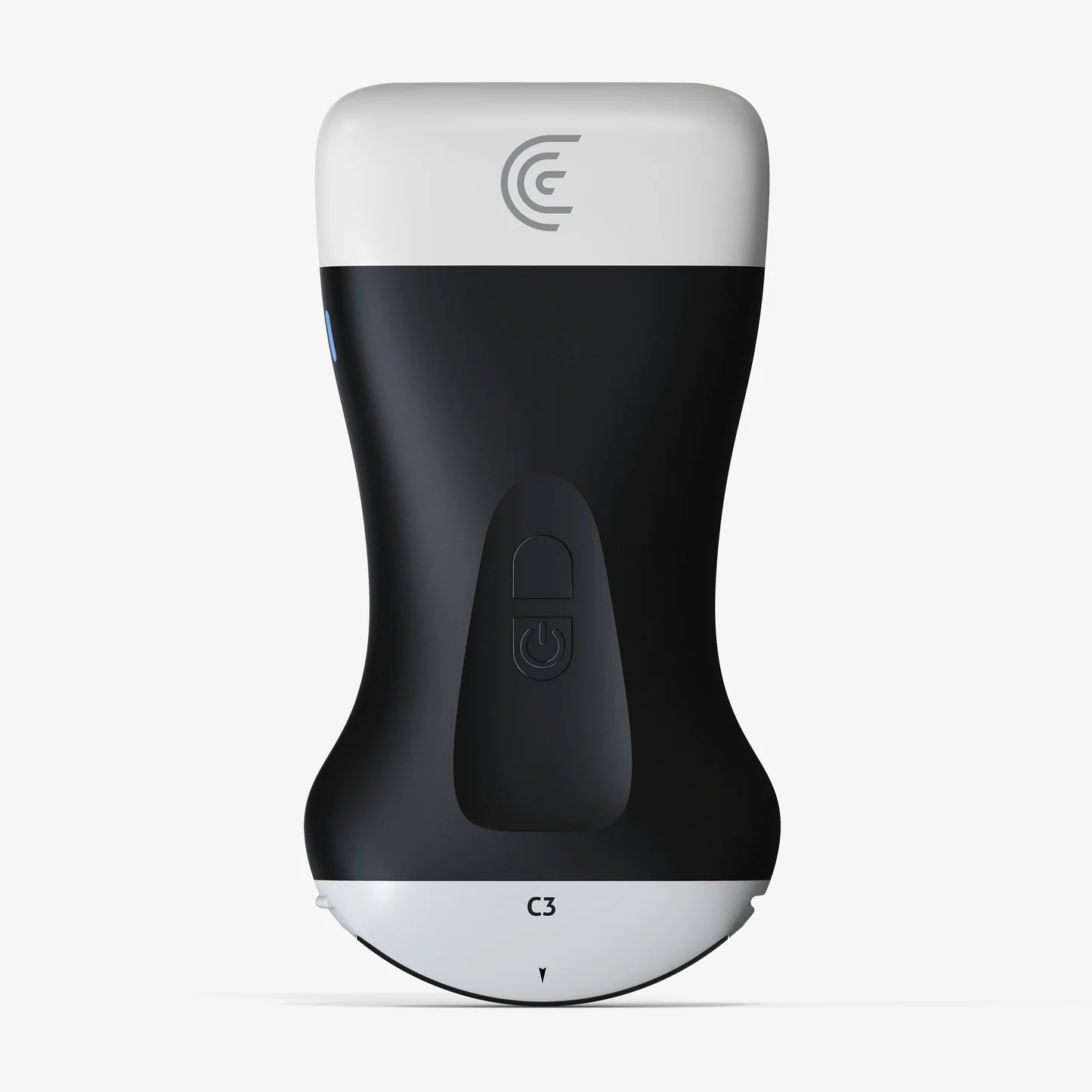
Founded in Vancouver, Canada in 2014, Clarius Mobile Health specializes in wireless handheld ultrasound device development, with clinical application across over 70 countries and FDA, CE, ISO13485 medical certifications. As a leading POCUS benchmark brand globally, it miniaturizes high-end cart-grade imaging into affordable portable handheld ultrasound machine for pregnancy, solving equipment shortage for grassroots clinics, midwifery services and rural prenatal outreach, with more than 4 million cumulative clinical scans worldwide.
3.1.2 Product Positioning
C3 HD3 is third-generation high-definition wideband 2–6MHz curved array wireless portable ultrasound machine for pregnancy, designed primarily for abdominal, obstetric and gynecological scanning. Preloaded dedicated OB software package and AI fetal biometry algorithm, tailor-made for grassroots prenatal clinics, midwife stations and home-based pregnancy checkup, ranking among the best ultrasound machine for pregnancy.
3.1.3 Clinical Accuracy Test of Clarius C3 Handheld Unit for Obstetric Scan
One clinical trial verified measurement precision of Clarius C3 handheld ultrasound machine for pregnancy against high-end cart-type pregnancy ultrasound machine. The same sonographer first completed all biometric measurements with premium equipment without result disclosure, then repeated testing on identical subjects with Clarius C3. Key indexes included gestational age plus fetal biometrics: CRL for under 14-week gestation, BPD, HC, AC and FL for 14+ weeks. All acquisition and caliper placement followed ISUOG official guidelines; each parameter was double-measured via conventional machine and single-recorded by Clarius C3.
Compared with premium systems, Clarius C3 generated average gestational age discrepancy of -0.47 days in first trimester and -1.67 days in second/third trimester with slight growing underestimation along advancing gestation. Mean differences of all core fetal biometric values (CRL, BPD, HC, AC, FL) between two modalities were comparable. Slight absolute error rise with increasing gestational age does not compromise overall reliability, qualifying Clarius C3 as dependable ultrasound machine for pregnancy for fetal biometry.
3.1.4 Five Core Advantages as Pregnancy Ultrasound Device
1.Full-gestation imaging coverage spanning 5 weeks to full term
- First trimester (5–12W): High-frequency mode precisely identifies gestational sac, yolk sac, embryo and primitive heartbeat for ectopic pregnancy exclusion;
- Second & Third Trimester (13–40W): Low-frequency penetration up to 40cm to visualize fetal body, placental attachment, amniotic fluid index and umbilical cord blood flow, matching mid-tier cart image standard for placenta previa and placental thickening screening;
- Preset OB-specific imaging protocols allow one-click parameter shift among early, mid and late pregnancy without repeated adjustment.
2.Perfect fit for grassroots clinics, midwife stations and rural home prenatal visit
Unlike bulky fixed cart pregnancy ultrasound machine, C3 is carry-on for mobile prenatal service and urgent bedside labor assessment for abruptio placentae or premature rupture of membrane.
3.AI algorithm lowers operational threshold for midwives and grassroots physicians
Built-in OB-AI automatically calculates fetal growth metrics to eliminate manual tracing error; short training enables standardized initial pregnancy registration and basic anomaly scan, resolving shortage of certified sonographers in remote regions and becoming preferred portable ultrasound machine for pregnancy for global maternal health programs.
4.Dramatically reduced procurement and running expense
Total investment equals 1/5~1/8 cost of conventional cart OB ultrasound, no extra expense for dedicated exam room or fixed medical monitor; only annual software subscription without expensive regular maintenance and calibration; existing smartphones/tablets serve as display to cut setup cost.
5.Complete integrated gynecology & obstetric auxiliary functions
Built-in Doppler module for fetal heart spectrum and umbilical artery S/D ratio calculation to evaluate intrauterine fetal perfusion; covers pre-conception follicle tracking, early ectopic differentiation and postpartum uterine involution review, maximizing clinic revenue via full-cycle women’s health service.
3.2 Butterfly iQ
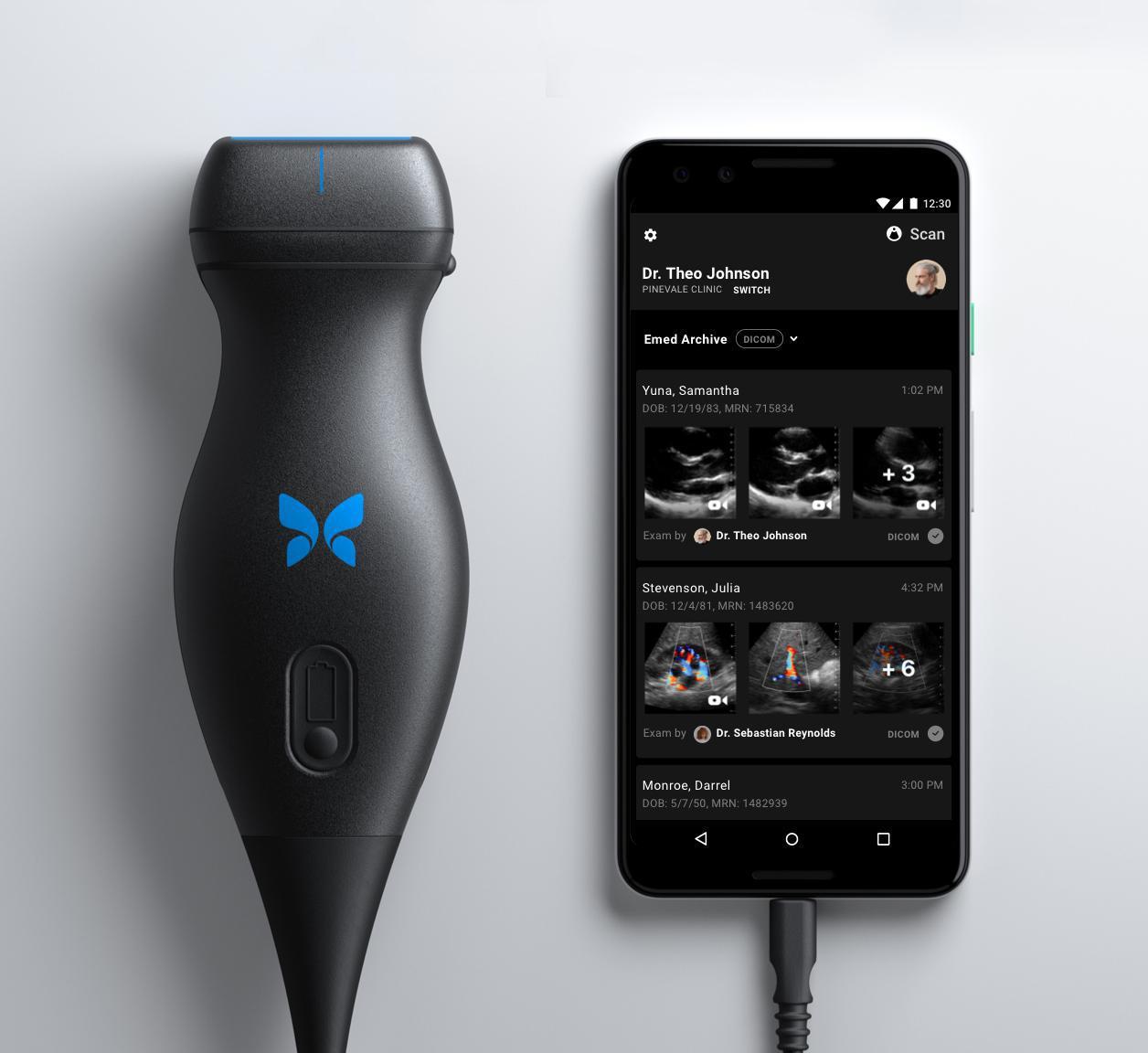
Founded in Massachusetts USA in 2011 by Dr Jonathan Rothberg, Butterfly Network invented Ultrasound-on-Chip CMUT semiconductor technology to launch the world’s first single-probe full-body handheld ultrasound device. Listed on NYSE in 2020 with Gates Foundation strategic investment, all product lines obtain FDA, CE and ISO certification, widely recognized as mature handheld ultrasound machine for pregnancy.
3.2.2 Product Positioning
All-in-one wired single-probe full-spectrum 1–12MHz variable-frequency portable ultrasound machine for pregnancy, simulating convex and linear array via internal chip tuning. Equipped with dedicated OB1 (first-trimester) and OB2/OB3 (mid/late gestation) factory presets, widely deployed for rural maternal outreach and private grassroots obstetric clinics.
3.2.3 Accuracy Evaluation of Butterfly iQ for Prenatal Biometry
Within the same comparative trial, Butterfly iQ’s prenatal measurement precision was tested versus premium cart ultrasound machine for pregnancy. Tested parameters contained gestational age, CRL (<14W), BPD, HC, AC, FL (≥14W).
Average gestational age deviation reached -0.20 days for early gestation and -0.68 days for advanced gestation; all biometric mean differences fell within ±3mm 95%CI despite mild progressive underestimation of CRL, HC, AC and FL as pregnancy progresses. Statistical data confirms Butterfly iQ is accurate enough to be included in routine prenatal screening as qualified pregnancy ultrasound machine.
3.2.4 Five Core Advantages for Obstetric Application
1.Single-probe seamless full-term coverage (unique competitive edge)
No probe replacement required: High-frequency 10MHz mode for 5–12W early gestation to visualize tiny sac and cardiac activity for ectopic screening; downshifted 1–5MHz low-frequency convex mode with 25cm penetration for advanced fetal anatomy, placenta, amniotic fluid and umbilical flow assessment, superior to fixed-frequency Clarius C3 on superficial early-pregnancy details.
2.OB-AI simplifies operation for untrained grassroots midwives
Validated by FIGO, AI-assisted measurement yields -0.2d early gestation error and -0.68d late gestation error, outperforming Clarius C3 statistically; large-scale government maternal health projects select this affordable portable ultrasound machine for pregnancy for free rural checkups.
3.Multi-scenario compatibility: fixed clinic + emergency labor + mobile village screening
Compact form fits daily registration scan, emergency bedside fetal distress check and vehicle-borne countryside outreach, outperforming immobile cart-type ultrasound machine for pregnancy in mobility.
4.Complete pre-pregnancy to postpartum full-cycle coverage
Pre-conception ovarian follicle scan, full-term routine biometry, Doppler umbilical assessment and postpartum uterine residue screening maximize return for private maternity clinics.
5.Economical long-term ownership cost
Single probe replaces separate convex plus linear array units to cut hardware cost; no dedicated room, calibration or maintenance spending with reused smart device screen.
3.3.1 Manufacturer Background
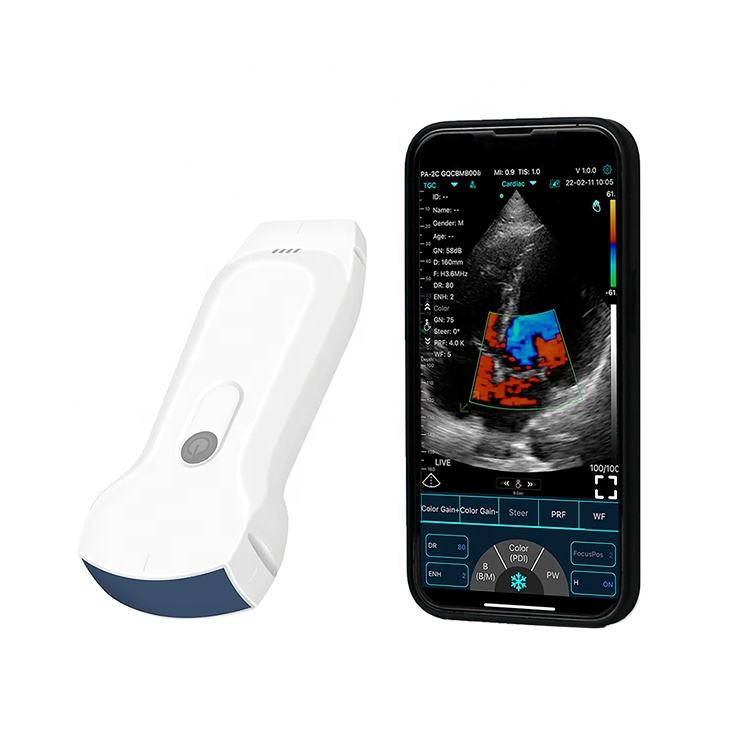
ArKang is a leading Chinese medical device manufacturer with 24-year industry experience focusing on emerging underdeveloped markets especially Africa. The company develops cost-effective medical gear including X-ray equipment, various handheld ultrasound device and endoscopes to ease local medical equipment shortage, providing reliable cheap portable ultrasound machine for pregnancy.
3.3.2 Product Positioning
AKB-C10T is ArKang’s flagship all-in-one handheld ultrasound machine for pregnancy integrating convex, linear and cardiac transducer within single probe for abdominal, small organ, cardiac, obstetric and vascular imaging.
1.Ultra-low price as qualified cheap portable ultrasound machine for pregnancy
Though not exclusively customized for obstetrics, AKB-C10T delivers acceptable prenatal biometric accuracy at far lower pricing than Clarius C3 and Butterfly iQ, perfectly matching African grassroots maternal institutions’ budget to become popular local ultrasound machine for pregnancy.
2.Multi-functional all-in-one probe design
Single unit substitutes multiple standalone probes to cover full-range clinical scan from obstetric screening to cardiac and peripheral vascular exam.
3.Multilingual user-friendly operation
Intuitive graphical interface supports English, Chinese, Russian, German, Italian, Spanish and Portuguese to accommodate global clinical operators.
Measured key obstetric indexes from handheld ultrasound device show high statistical consistency with premium conventional pregnancy ultrasound machine. Compact size, easy operation and low procurement cost make portable ultrasound machine for pregnancy capable of delivering credible clinical evidence for bedside diagnosis across hospitals, grassroots centers and developing nations. Incorporating affordable cheap portable ultrasound machine for pregnancy into standard prenatal protocols effectively expands obstetric ultrasound accessibility in resource-deficient regions, with Clarius, Butterfly and ArKang’s AKB-C10T standing out as top picks of best ultrasound machine for pregnancy.
1.What is a prenatal ultrasound?
A prenatal ultrasound (also known as a sonogram) is a non-invasive imaging technique that gives doctors an accurate picture of a fetus. An ultrasound can be performed at different times during pregnancy to identify potential fetal conditions or congenital anomalies. It also provides information that helps patients and their providers manage care for the pregnancy and the fetus.
2.how to use an ultrasound machine for pregnancy?
a.Preparation
• Patient positioning: supine or slight lateral decubitus or lithotomy according to scan requirement.
• Preset selection: switch machine to OB preset optimized for fetal frequency and contrast.
• Gel preparation: apply abundant warm ultrasound gel on lower abdomen for transabdominal scan or sterile probe cover plus gel for endovaginal examination.
b.Scanning skills
• Transabdominal scan: place convex probe above pubic symphysis with marker toward patient’s head; slowly rock and tilt probe referencing bladder to visualize uterus downward toward pelvic outlet.
• Transvaginal scan: mainly for first trimester; insert covered probe gently with indicator upward for high-resolution early gestation imaging.
• Parameter adjustment: modify imaging depth and field of view, perform fan sweep and 90-degree rotation to acquire sagittal and transverse uterine planes.
c.Image interpretation and measurement
• First trimester: identify gestational sac, yolk sac and embryo to confirm intrauterine pregnancy, calculate CRL for gestational age estimation.
• Second & Third Trimester: evaluate fetal anatomy, placenta location, amniotic fluid volume and fetal presentation.
3.Is it safe in pregnancy to use a handheld ultrasound?
Yes, diagnostic handheld ultrasound device is safe when operated by licensed clinical staff, yet non-prescription home fetal Doppler and self-performed scan are strongly discouraged by medical authorities. Diagnostic ultrasound generates no ionizing radiation with proven zero established fetal hazards; safety relies entirely on trained operators limiting unnecessary prolonged tissue exposure and correct result interpretation.
4.What type of ultrasound machine is used for pregnancy?
Available pregnancy ultrasound machine falls into three categories: conventional cart-based, laptop portable and handheld ultrasound machine for pregnancy.
• Cart-type ultrasound machine for pregnancy: full-size wheeled high-performance fixed system installed in formal obstetric hospitals with premium resolution and comprehensive diagnostic functions, representative models including GE Voluson series, Philips Epiq Elite and ArKang AK-S7500 as mainstream best ultrasound machine for pregnancy.
• Laptop portable ultrasound: briefcase-sized compact unit for bedridden inpatients, delivery ward and small clinics such as Mindray MX7 and ArKang AKB-M30.
• Handheld ultrasound machine for pregnancy: pocket-sized portable ultrasound machine for pregnancy connecting via wired/WiFi to mobile devices (e.g. AKB-C10T), used for rapid bedside fetal presentation and heartbeat confirmation by midwives and general practitioners.
References:


